

Learning how to create an effective study schedule and stay consistent is the only way I survived my toughest college semesters without losing my mind. You know that sick feeling on Sunday night when you realize you wasted the entire weekend avoiding your textbooks? I lived in that panic cycle for years. Fixing it did not require crazy discipline, just a brutally honest, human system that actually worked.
Run an Honest Time and Energy Audit
Most people build schedules for a fictional superhuman version of themselves. You imagine waking up at 5:00 AM, drinking green tea, and knocking out calculus problem sets for four uninterrupted hours. In reality, you hit snooze three times, spend twenty minutes hunting for clean socks, and feel mentally drained by 2:00 PM.
Before you pencil a single study session into your calendar, track your actual behavior for three consecutive weekdays. Write down when you wake up, when you eat, how long your commute takes, and exactly when your brain turns to mush. Identifying your natural daily peaks and valleys is the foundation of an energy audit that actually reflects your biological rhythm. If you try to schedule high-stakes revision during your daily 3:00 PM energy crash, you will fail every single time. Respect your natural wiring instead of fighting it.

Anchor Study Blocks Around Fixed Commitments
Schedules fall apart when you treat your calendar like an open wish list instead of a structured boundary. Start by mapping out your hard commitments: class lectures, work shifts, meal times, commute windows, and gym sessions. These are your immovable anchors.
Once those blocks are locked in, search for ninety-minute openings in between. Ninety minutes is the golden window for deep focus because your brain can sustain intense cognitive effort before retention rates plummet. When figuring out how to create an effective study schedule and stay consistent, you must protect your rest hours just as fiercely as your study blocks. Cap your daily study sessions at two or three focused windows. This method of time-blocking eliminates the vague dread of having an endless, undefined workday hanging over your head.
Assign Specific Micro-Tasks Instead of Vague Subjects
Writing “Study Biology” across a two-hour calendar block is an open invitation for procrastination. Ambiguity creates friction in your brain. When you sit down at your desk and face a massive, ill-defined subject, you waste twenty minutes deciding where to begin before eventually checking your phone.
Eliminate the guesswork by translating every study block into concrete micro-tasks before the session begins. Instead of “Study Chemistry,” write “Solve practice problems 1 through 15 on page 84 and create ten flashcards for chapter four functional groups.” Specificity gives your brain a clear finish line. You know exactly what materials to open, what output you must produce, and when the task is officially done. This small shift turns overwhelming coursework into manageable, bite-sized victories.

Build Mandatory Buffer Blocks for Inevitable Chaos
Life rarely cooperates with an overly optimized timetable. A lab report runs long, you catch a head cold, or your car battery dies in the parking lot. When your schedule is packed edge to edge with zero margin for error, a single delayed assignment triggers a domino effect that ruins your entire week.
Save your sanity by scheduling a weekly buffer block every Friday afternoon or Sunday morning. Treat this two-hour slot as a zero-agenda catch-up zone. If you fall behind during the week, you absorb the extra work during this designated buffer without derailing your upcoming schedule. If you managed to stay on track all week, you earn two free hours to play video games, read a novel, or take a guilt-free nap.
Pick the Right Tools Without Over-Complicating the System
Do not spend forty hours color-coding intricate digital databases when a basic five-dollar spiral notebook gets the job done. Many students fall into productive procrastination by spending days designing elaborate dashboard setups instead of actually reviewing their course materials.
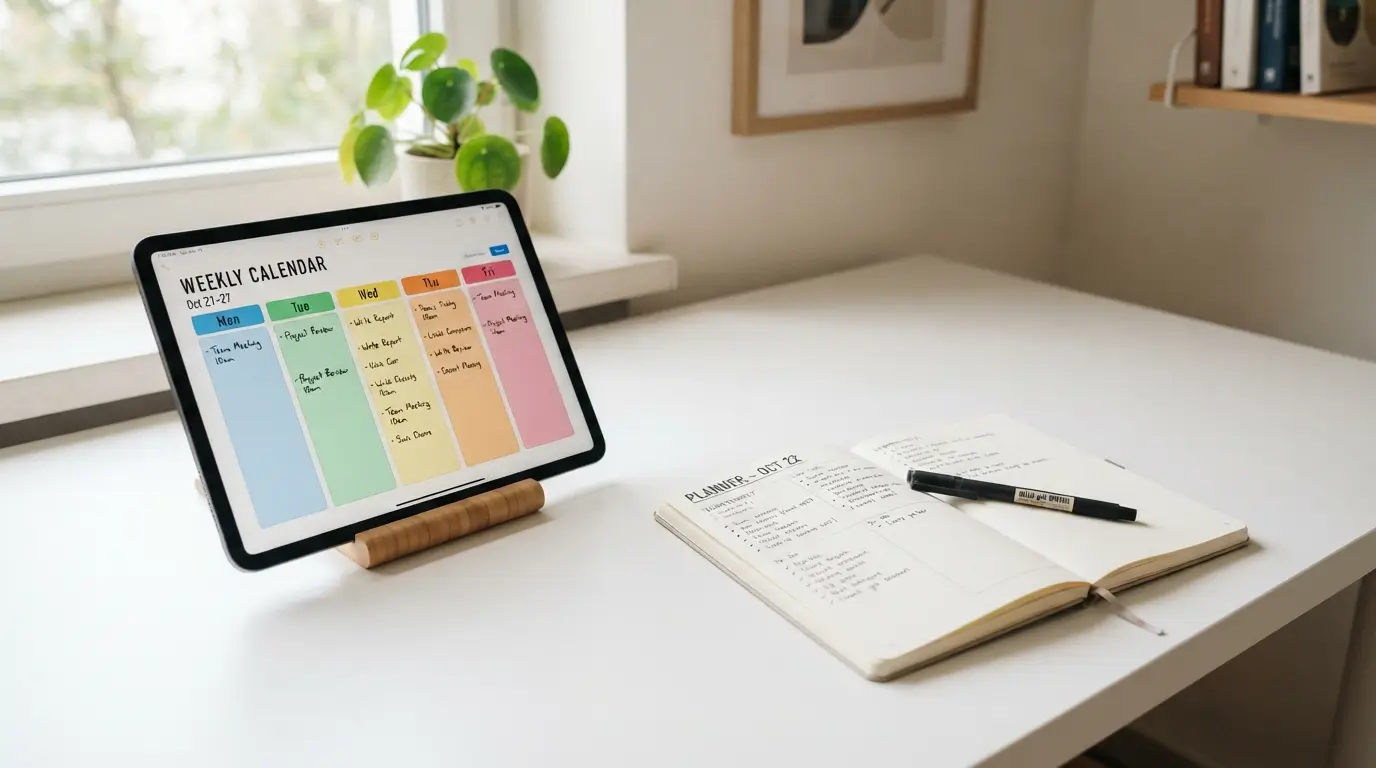
Keep your organizational stack ruthlessly simple. Use Google Calendar or Apple Calendar for big-picture scheduling and recurring event alerts, paired with a simple physical notebook on your desk for daily task execution. Digital tools excel at keeping track of changing deadlines, while physical paper keeps your eyes away from web browsers and notification badges while you work. Mastering how to create an effective study schedule and stay consistent requires friction-free tools that take less than two minutes to update each morning. Emphasize friction reduction over aesthetic perfection every time.
How to Create an Effective Study Schedule and Stay Consistent When Motivation Drops
Relying on raw willpower to open your notes is the fastest route to academic burnout. Willpower is a finite resource that drains with every decision you make throughout the day. If you wait until you feel inspired to tackle organic chemistry, you will never open the book.
Build behavioral routines that remove motivation from the equation entirely. Use habit stacking to tie your study sessions to established daily habits. For instance, tell yourself: “As soon as I set my morning coffee on my desk, I will immediately open my flashcard deck for five minutes.” Lower the barrier to starting so drastically that resistance becomes negligible. Once you cross the five-minute threshold, cognitive momentum takes over, and continuing the work becomes significantly easier than stopping.
Defeat the Procrastination Loop with Active Recall
Staring blankly at highlighted textbook paragraphs creates an illusion of competence while doing almost nothing for your memory. Passive reading feels effortless, which makes your mind wander toward social media feeds within ten minutes. That boredom fuels procrastination and makes you dread opening your planner the next day.
Transform every study block into an active test by implementing active recall techniques. Close your notes after reading a section and summarize the core principles aloud, or quiz yourself using flashcard tools like Anki. IMO, passive reading is the primary reason students spend four hours at a desk yet retain almost nothing during exam week. Active testing demands your full attention, speeds up retention, and cuts your total necessary study time in half.
Establish a Five-Minute Weekly Review Routine
Every Sunday evening, sit down for five minutes to inspect what worked during the previous seven days and what collapsed. If you scheduled three hours of math on Thursday nights and consistently skipped it to hang out with friends, stop pretending you will magically change next Thursday.
Adjust your calendar to fit reality. Move those demanding math problems to Friday morning when your schedule is clearer. Understanding how to create an effective study schedule and stay consistent means treating your plan like an experiment rather than a prison sentence. A quick weekly reset lets you adapt to shifting class workloads, project deadlines, and personal energy levels before bad habits take root. Small weekly tweaks prevent massive semester-long burnout.

Protect Your Off-Switch to Prevent Silent Burnout
Guilt-free rest is what makes deep focus possible when you sit back down at your desk. When you study half-heartedly with a television show playing in the background, your brain neither absorbs the material nor genuinely rests. You end up feeling constantly exhausted while making zero real progress.
Establish a strict hard cutoff time every single evening. When 8:00 PM arrives, close your laptop, put your notebooks away, and do not look at school materials until the next morning. FYI, resting without checking your emails or course notifications is just as essential as the study sessions themselves. Knowing that your evening offers genuine relaxation creates a psychological incentive to work with intense focus during your scheduled afternoon blocks.
Frequently Asked Questions
How many hours should I study each day?
Quality beats quantity every single time. Most students thrive on two to four hours of focused, distraction-free study per day. Splitting that time into two distinct sessions prevents mental fatigue and produces far better retention than dragging out a miserable six-hour cramming session where half the time goes to daydreaming.
What is the best time of day to follow a study schedule?
Your ideal study window depends entirely on your natural circadian rhythm. Early birds retain information best between 8:00 AM and noon, while night owls often hit peak focus after dinner. Pay attention to when your brain feels sharpest, then guard those specific hours for your most demanding academic subjects.
How do I get back on track after falling behind on my schedule?
Forgive yourself immediately and avoid cramming double the work into tomorrow. When creating an effective study schedule and staying consistent, missed days will happen. Simply trim low-priority tasks, use your weekly buffer block to catch up on essentials, and resume your normal routine without carrying lingering guilt into the next week.
Should I use a digital calendar or a paper planner for studying?
Choose whichever medium creates the least resistance for your daily workflow. Digital apps like Google Calendar excel at sending reminders and adjusting recurring events across multiple devices. Paper planners, however, eliminate screen distractions and provide tactile satisfaction when crossing off completed tasks. Combining both often delivers the strongest daily structure.
How do I stop looking at my phone during study blocks?
Place your phone physically in another room or inside a closed drawer before your timer starts. Apps like Forest or website blockers like Cold Turkey also prevent impulsive browsing on your laptop. Reducing visual triggers makes it far easier for your brain to settle into uninterrupted deep work.
Conclusion
Building a study routine that fits your actual lifestyle takes a little trial and error, but the peace of mind is worth every adjustment. Pick two strategies from this guide, apply them to your planner this week, and watch your daily stress drop. What is the biggest hurdle keeping you from sticking to your calendar right now?
Also Read; Best Study Techniques for Students Preparing for Important Exams 2026