

Finding the best ways to learn difficult subjects using simple study techniques saved my GPA when organic chemistry almost crushed my soul. Sitting at a cluttered desk with a dense textbook open makes your brain freeze up instantly. That brutal feeling of reading the same paragraph six times without understanding a single word is exhausting. You do not need genius genetics, just smarter daily habits.
Deconstruct Complex Ideas Into Micro-Topics
Tackling a massive, intimidating topic all at once guarantees mental paralysis. When you confront advanced calculus, neurobiology, or tax law as an undivided whole, your working memory hits a wall. Human working memory can only hold a few pieces of new information at any given moment. Splitting a dense chapter into standalone micro-units protects you from mental fatigue and confusion.
Grab the course syllabus or textbook index and build a one-page topic tree in an app like Obsidian or on a blank notepad. Isolate individual definitions, foundational rules, and basic mechanisms before trying to understand how they interact in complex scenarios. Master one small mechanism per study block. Reducing cognitive overload early gives you the momentum needed to tackle larger theoretical systems without feeling overwhelmed.

Explain Hard Theories in Kid-Friendly Terms
Richard Feynman famously proved that true mastery means being able to teach an idea to a sixth grader. When you hide behind dense academic jargon, you often fool yourself into thinking you understand a topic better than you actually do. Translating hard concepts into plain, everyday language strips away that false security and exposes your exact knowledge blind spots.
Take out a fresh sheet of paper, write the concept at the top, and explain the mechanism using simple words and short sentences. Avoid technical terms entirely; if you must use one, define it immediately using a basic real-world example. The moment you struggle to explain a step clearly, open your reference book and fill that gap. Using the Feynman technique turns passive reading into an active diagnostic tool that fixes weak links in your mental chain.
Best Ways to Learn Difficult Subjects Using Simple Study Techniques on Paper
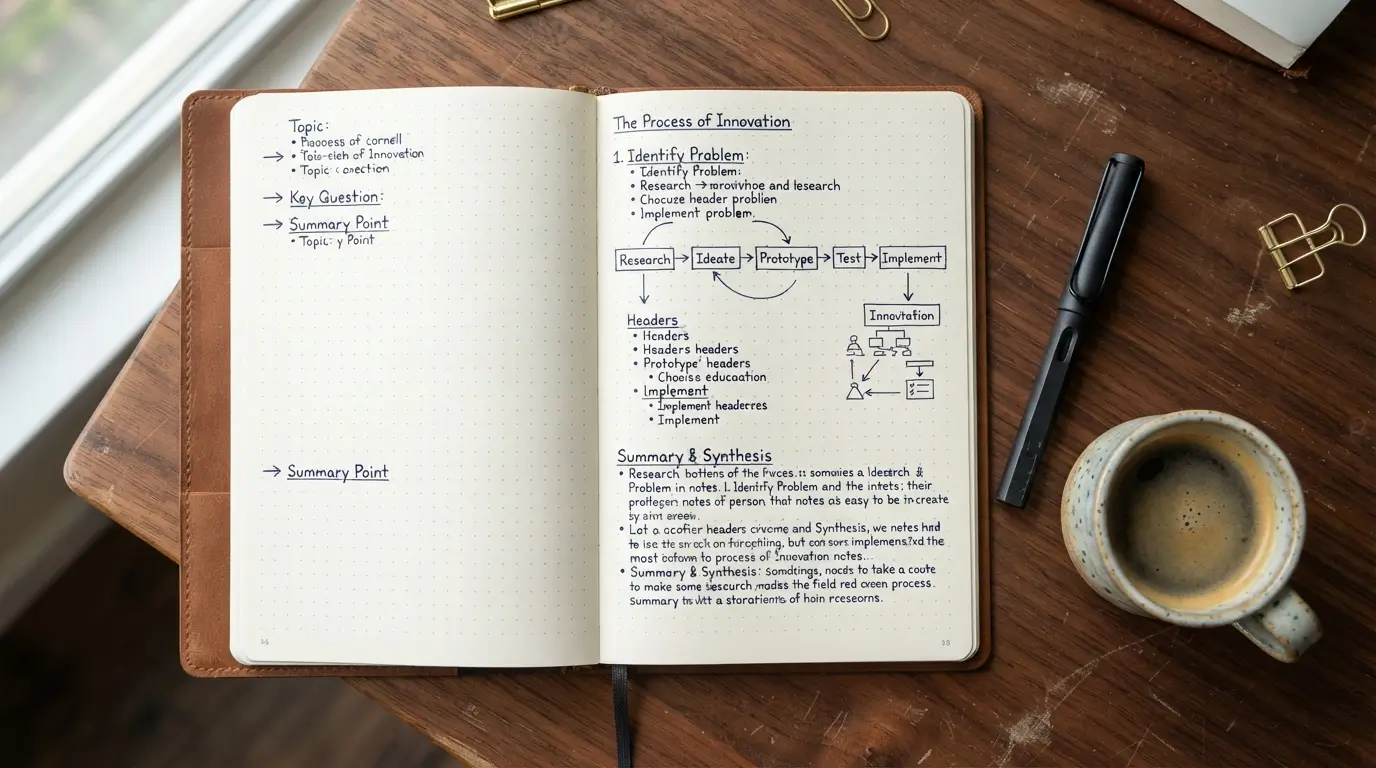
Ditching passive highlighting for physical pen-and-paper synthesis forces your brain to process information deeply. Highlighting text gives a false sense of productivity while requiring almost zero cognitive effort. Writing notes by hand, however, forces you to summarize ideas in real time because you cannot write as fast as a lecturer speaks or as fast as you read.
Divide your notebook page using the classic Cornell layout. Place concise summaries, structural diagrams, and key formulas on the right side, then write self-test cues on the left margin. Draw process flowcharts to connect cause and effect rather than copying block paragraphs word for word. Engaging in active synthesis on physical paper creates tactile and visual memory anchors that make retrieval far easier during stressful exams.
Build Rapid Retrieval Loops Through Self-Quizzing
Most students waste hours rereading highlighted notes because recognition feels deceptively like true mastery. Glancing at a page and thinking you know the material is not the same as recalling it from scratch under exam conditions. Pulling facts out of your memory strengthens neural pathways far more effectively than repeatedly cramming information into your brain.
Close your notebook after every study session and write down every key concept you remember on a blank whiteboard. Build digital flashcard decks in Anki or Quizlet, creating specific question prompts rather than basic term-and-definition cards. Frame cards around functional questions, such as what triggers a specific reaction or why a formula requires a particular variable. Practicing active recall daily trains your brain to retrieve critical data quickly without relying on external hints.
Space Out Your Reviews to Stop Memory Decay
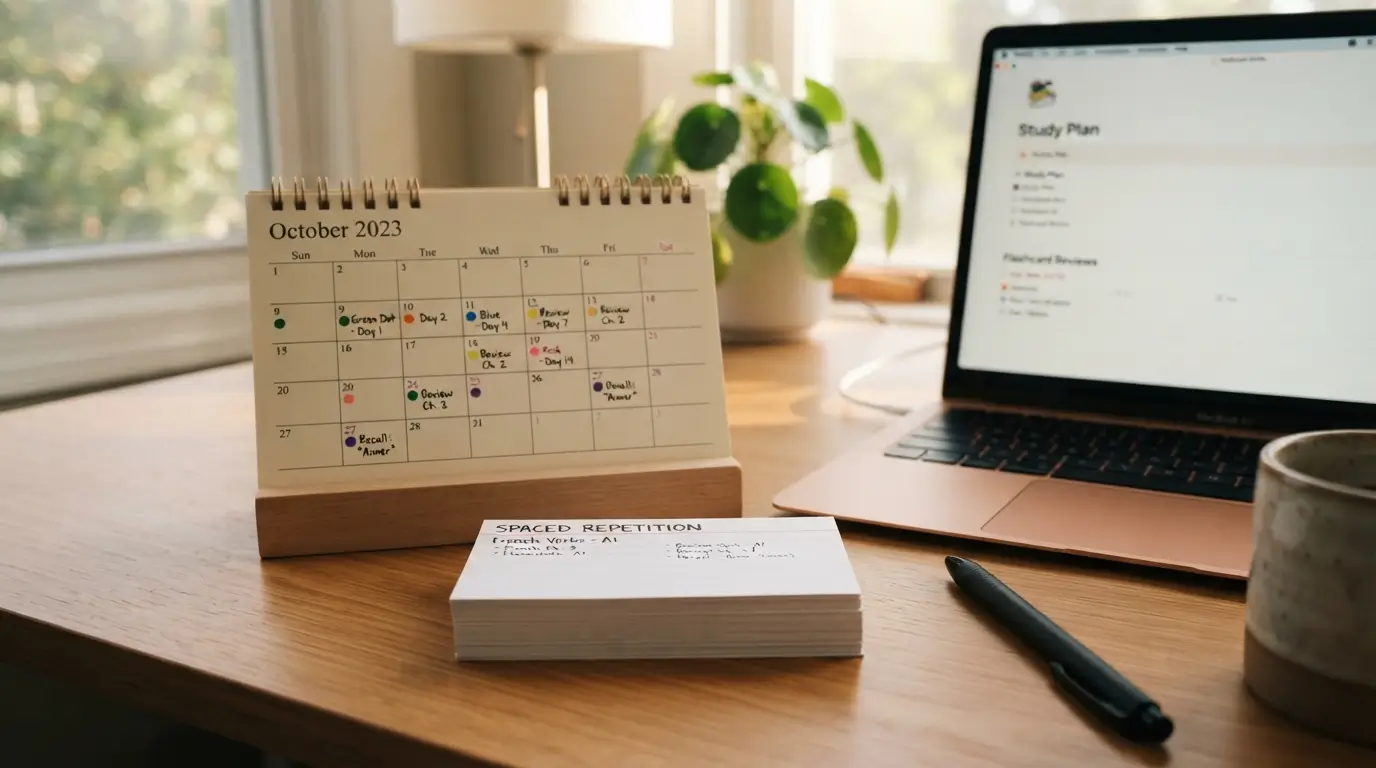
Cramming for ten hours on a Sunday creates an illusion of competence that vanishes within forty-eight hours. The human brain naturally prunes away newly acquired information unless you signal that the data is essential for survival. Reviewing material at strategically expanding intervals interrupts memory decay and locks facts into long-term storage.
Schedule short review sessions on day one, day three, day seven, and day twenty-one after learning a hard concept. Applying the best ways to learn difficult subjects using simple study techniques prevents the dreaded cramming cycle and cuts total study hours significantly. Set up automated scheduling in Anki or track intervals in a basic calendar app. Relying on spaced repetition ensures you spend time reviewing only the concepts you are on the verge of forgetting.
Dissect Solved Problems in Reverse
Jumping straight into complex practice problems without analyzing worked examples leads to frustration and wasted time. Novice learners often get stuck on the first step of a hard problem because they lack an intuitive mental model of the overall solution path. Deconstructing fully solved problems helps you see the underlying logic before you attempt independent execution.
Select three fully solved problems from your textbook or lecture slides. Work backward from the final answer to the original question prompt, annotating every calculation and formula transition. Ask yourself why the author chose a specific substitution, what rule justified that step, and what clues in the problem prompted that decision. This deliberate breakdown accelerates schema acquisition, giving you the structural roadmap needed to solve unfamiliar exam questions independently.
Anchor Abstract Concepts with Concrete Analogies
Our brains evolved to remember physical spaces, tangible objects, and vivid stories rather than dry, abstract formulas. When you study complex systems like computer networking, organic reactions, or macroeconomic policy, raw theory can feel too disconnected to stick. Grounding abstract rules in familiar, real-world analogies provides an intuitive framework for immediate comprehension.
Compare an electrical circuit to water flowing through household pipes, where voltage acts as water pressure and resistance functions like a narrow pipe valve. Picture a computer memory stack like a physical spring-loaded plate dispenser in a cafeteria, where the last plate added is always the first plate removed. Developing your own vivid analogical reasoning models anchors complicated rules into familiar reference points, making complex mechanisms intuitive and memorable.
Protect High-Focus Attention with Strict Time Boxing
Grinding through four-hour marathon study sessions destroys retention and breeds quiet resentment. Conceptual learning requires intense executive function, which tires quickly after thirty to forty minutes of deep effort. Marathon study blocks lead to daydreaming, phone checking, and diminishing returns.
Set a physical kitchen timer for twenty-five minutes and dedicate that block to a single difficult problem or sub-topic. Silence notifications and keep your phone in another room to prevent split attention. Take a strict five-minute break when the timer rings, stepping away from all screens to stretch or grab water. Consistently utilizing deep work intervals keeps mental energy sharp, allowing you to absorb tough material in less total time.

Run Weekly Diagnostic Audits to Target Weaknesses
Reviewing topics you already know feels comforting, but it produces zero real improvement. High test scores come from systematically hunting down your points of failure and eliminating them before test day arrives. A weekly diagnostic audit keeps you honest about your actual skill level.
Dedicate your final study session of the week to taking a timed, closed-book practice quiz. Grade your answers strictly and log every mistake in a dedicated spreadsheet or notebook. Tag each error as a conceptual misunderstanding, a careless calculation slip, or a misread prompt. Conducting regular error log analysis directs your study efforts toward your highest-leverage growth areas, preventing nasty surprises on exam day.
Frequently Asked Questions
What are the best ways to learn difficult subjects using simple study techniques when pressed for time?
Prioritize active recall and backward problem-solving. Skip rereading and highlighting entirely. Grab past exam questions, attempt them under timed conditions, and check the answer keys immediately to pinpoint knowledge gaps. Two hours of intense self-testing produces more retention than six hours of passive skimming.
How do I know if I truly understand a complex concept?
Try teaching the idea aloud to someone with zero background in the subject without looking at your notes. If you rely on technical jargon, stumble over basic definitions, or cannot produce a simple real-world analogy, your conceptual model has blind spots that need immediate review.
Is digital note-taking worse than handwriting for tough topics?
Typing often encourages mindless, verbatim transcription, which bypasses critical cognitive processing. Handwriting forces you to summarize, synthesize, and visually structure information in real time. If you prefer digital workflows, use a stylus and tablet to retain the cognitive benefits of drawing diagrams and writing by hand.
How many hours should I study each day for hard subjects?
Quality always trumps raw volume. Aim for two to three hours of highly focused, distraction-free study split into 25-minute blocks. Marathon sessions longer than four hours usually result in severe mental fatigue and declining retention, making additional study time counterproductive.
What should I do when I hit a complete mental block?
Step away from your desk immediately. Take a brisk walk, drink water, or sleep on the problem. Diffuse-mode thinking allows your subconscious mind to connect disparate neural networks while you rest, often resolving difficult conceptual bottlenecks without active strain.
Conclusion
Mastering tough topics comes down to consistent habits, honest self-quizzing, and breaking complex ideas into bite-sized pieces. Drop the all-night cram sessions, pick two techniques from this guide, and put them into practice during your next study block. Which subject are you tackling first this week?
Also Read; How to Study Smarter Instead of Spending More Hours Studying 2026