

Learning how to avoid distractions and stay focused during study sessions feels nearly impossible when your phone buzzes every four minutes and your brain wanders constantly. We have all sat down with good intentions, only to scroll social media twenty minutes later. You do not lack discipline or intelligence. You just need a concrete, battle-tested plan that protects your attention span from start to finish.
Strip Your Physical Workspace Down to the Essentials
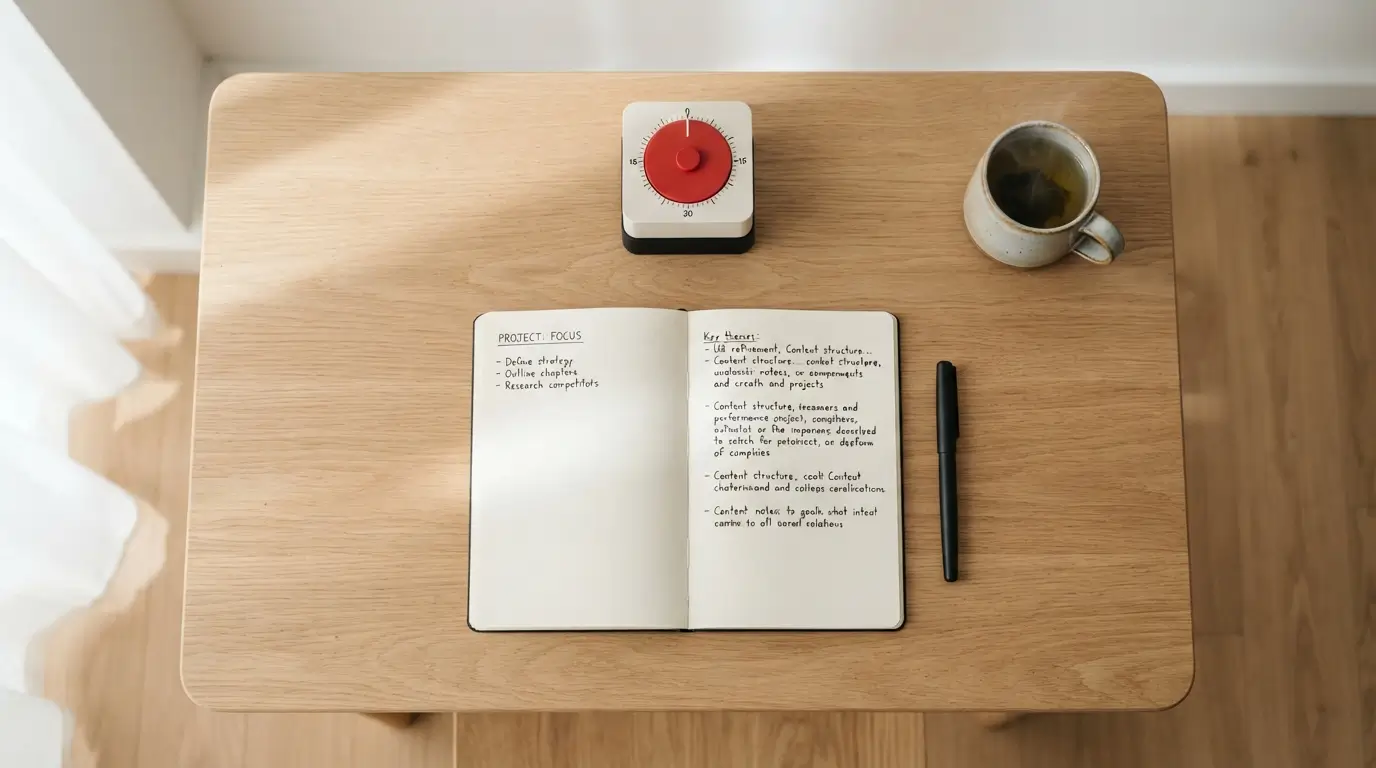
Clutter on your desk competes directly for your visual cortex resources. If your workspace has old coffee mugs, unopened mail, and random chargers scattered around, your brain registers those items as unfinished tasks. Clear everything off the table except the exact book, notebook, and pen you need for the current task.
Place your phone in another room entirely. Research shows that having a phone on your desk, even facedown and turned off, silently drains your working memory because part of your brain actively works to ignore it. Buy a cheap digital timer like a Time Timer or use a simple kitchen timer so you never have to touch your phone to check the clock. When your physical space feels clean and minimal, your mind settles down much faster.
How to Avoid Distractions and Stay Focused During Study Sessions on Digital Devices
Laptops present the biggest hazard to your concentration because distraction sits just one click away. You open a browser tab to look up a textbook definition and end up watching video essays for forty-five minutes.
Tame your machine by setting up an aggressive blocking protocol. Install tools like Freedom or Cold Turkey Blocker to shut down access to news portals, social platforms, and streaming sites before you begin. Create a dedicated browser profile purely for academic work with the bookmarks bar hidden and entertainment logins signed out. If you do not genuinely need the internet for a reading assignment, disconnect your Wi-Fi completely. Forcing friction between your urge to procrastinate and the actual distraction gives your rational brain enough time to step in and stop the impulse.
Implement Structured Timeboxing with the Pomodoro Method
Vague study sessions that stretch endlessly into the evening invite wandering thoughts and low-effort work. Your brain naturally expands a task to fill whatever time you give it.
Fix this habit by adopting strict timeboxing intervals. Work with intense, unbroken focus for twenty-five or fifty minutes, followed by a mandatory five or ten-minute rest period. Knowing that a break is coming in fifteen minutes makes it far easier to ignore a random thought or notification. When you know you must work for six continuous hours, your brain seeks immediate escape. When you only have to hold your concentration for twenty-five minutes, resisting temptation feels manageable. Set a timer, commit completely to a single problem or chapter, and stop working the moment the bell rings.

Park Random Thoughts on a Distraction Sheet
Internal distractions often derail you faster than external notifications. You sit down to solve a problem set, and suddenly you remember that you need to buy laundry detergent, reply to an email, or check movie tickets.
Mastering how to avoid distractions and stay focused during study sessions often comes down to offloading these internal interruptions before they hijack your train of thought. Keep a blank notepad next to your keyboard, designated as your distraction sheet. The moment a stray thought pops into your head, write it down in three words and immediately return to your material. Acknowledging the thought releases the mental tension without interrupting your workflow. Your mind stops looping because it knows the task is safely captured. Review the list only after your timer rings.
Replace Passive Highlighting with Active Recall
Boredom is the fastest path to losing your train of thought. Highlighting paragraphs and re-reading textbook chapters creates a dangerous illusion of competence while requiring very little mental effort. Because your brain stays largely disengaged, it naturally looks for something more stimulating to do.
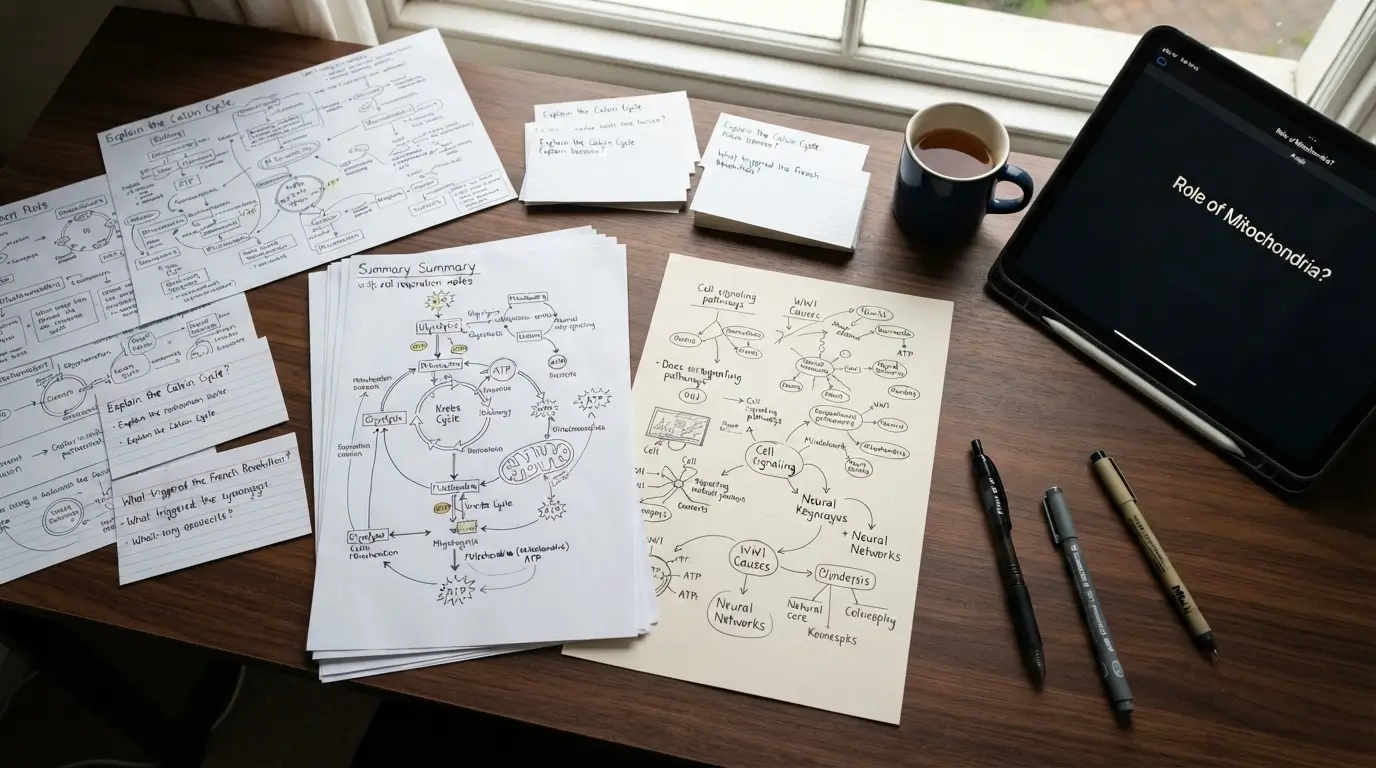
Switch to active recall techniques that force your mind to generate answers from scratch. Close your textbook after reading a section and summarize the main ideas on a blank sheet from memory. Build flashcards using Anki to test yourself on core concepts, formulas, and definitions. Teaching the concept out loud to an empty room, known as the Feynman Technique, exposes gaps in your understanding instantly. When studying demands constant cognitive output, your brain does not have the spare capacity to get distracted.
Build a Repeatable Pre-Study Trigger
Relying on raw motivation to sit down and concentrate is a recipe for inconsistency. Athletes use warm-up routines because physical cues signal the body that performance time has arrived. You can condition your mind the exact same way.
Develop a five-minute focus ritual that you perform before opening your books. Fill up a dedicated water bottle, put on a pair of noise-canceling headphones, and queue up the same instrumental album or brown noise track on Spotify. Consistent sensory cues condition your brain over time. FYI, listening to songs with vocal lyrics splits your auditory processing bandwidth, so stick to lo-fi beats, ambient synth, or classical tracks. When practicing how to avoid distractions and stay focused during study sessions, starting with the exact same sequence of actions removes the friction of getting started.
Take Rest Breaks That Actually Restore Your Brain
Grabbing your phone the second your break timer rings completely defeats the purpose of resting. Scrolling social feeds or checking breaking news floods your working memory with fresh emotional stimuli, leaving your mind just as fatigued as before.
Spend your intervals on low-stimulation activities that allow true cognitive recovery. Stand up from your chair, stretch your hip flexors, drink a full glass of cold water, or walk outside for five minutes to let your eyes look at natural distance. Giving your visual field a break from screens reduces optic strain and prevents headaches. If you stay at your desk during breaks, your brain struggles to separate work time from downtime. Step away completely, let your mind wander without a screen, and return to your desk with a refreshed attention span.

Protect Your Biological Energy Levels
Mental focus is ultimately a physical resource powered by glucose and restorative sleep. You cannot out-strategize chronic sleep deprivation or energy crashes caused by sugary snacks.
Eat light, nutrient-dense meals before deep work blocks to prevent post-lunch brain fog. Stable blood sugar maintains steady alertness, whereas heavy carb loads divert blood flow toward digestion. Stay hydrated throughout the day, as even mild dehydration reduces cognitive processing speed and working memory performance. Aim for seven to eight hours of quality sleep every night. IMO, an extra hour of rest will do more for your exam scores than an extra hour of exhausted cramming at two in the morning. Treat your physical stamina as the foundation of your cognitive endurance.
Group Similar Tasks into Single Batches
Switching between different types of mental tasks creates heavy cognitive friction known as attention residue. When you jump from solving math problems to drafting an essay and then checking emails, small parts of your focus remain stuck on the previous activity.
Organize your study schedule by batching similar assignments together. Dedicate one entire session exclusively to quantitative practice problems, and reserve another session purely for heavy reading and note taking. Grouping tasks with similar cognitive demands allows your mind to stay locked inside a specific problem-solving mode without losing momentum. Keep your materials organized by subject before you start so you never break your flow to search for files or notes.
Frequently Asked Questions
What is the single most effective way to avoid distractions and stay focused during study sessions?
Removing your smartphone from the room produces the biggest immediate improvement in concentration. Physical separation eliminates the unconscious temptation to check notifications. Pair this physical barrier with a visual timer on your desk so you track your study intervals without relying on digital screens.
How long should an ideal study session last before taking a break?
Most people maintain peak attention for twenty-five to fifty minutes at a time. Experiment with a twenty-five-minute block followed by a five-minute break, or fifty minutes of work followed by a ten-minute rest. Choose the pacing that matches your personal endurance without triggering mental fatigue.
Does listening to music help or hurt concentration while studying?
Instrumental audio, video game soundtracks, and ambient noise help drown out environmental sounds without overwhelming your language processing faculties. Avoid music with vocal lyrics, podcasts, or talk radio, as words actively compete with your reading comprehension and analytical thinking.
What should I do if my mind keeps wandering during reading?
Switch from passive reading to active note-taking immediately. Use a pen to jot down summary bullet points in the margins or write test questions based on the text. Active physical interaction forces your attention back onto the page and prevents automatic daydreaming.
How can I recover my focus after a major distraction interrupts me?
Take three deep breaths, reset your workspace, and write down the single next action you need to take. Do not attempt to tackle a huge chapter at once. Focus entirely on finishing one paragraph or one math problem to rebuild your working momentum.
Conclusion
Building unbreakable concentration is a physical and mental skill that improves with deliberate practice, not an inborn personality trait. Start by testing one or two of these adjustments during your next block and observe how your productivity shifts. Which distraction currently gives you the hardest time when you sit down to work?
Also Read; Best Ways to Improve Memory and Retain Information for Longer 2026