

Learning how to study smarter instead of spending more hours studying saved my sanity during college finals. I used to sit at my desk for eight grueling hours, highlighting textbooks until the pages glowed neon, only to blank out on test day. Staring at paper does not mean retaining facts. Once you fix your actual study mechanics, your grades rise while your desk time drops in half.
Ditch Passive Highlighting for Active Recall Systems
Highlighting lines of text gives you a dangerous hit of false confidence. When your eyes glide over familiar words, your brain tricks you into believing you own that information. Psychologists call this the fluency illusion. Reading notes over and over requires almost zero cognitive effort, which is why the material vanishes from your head the second you close the binder.
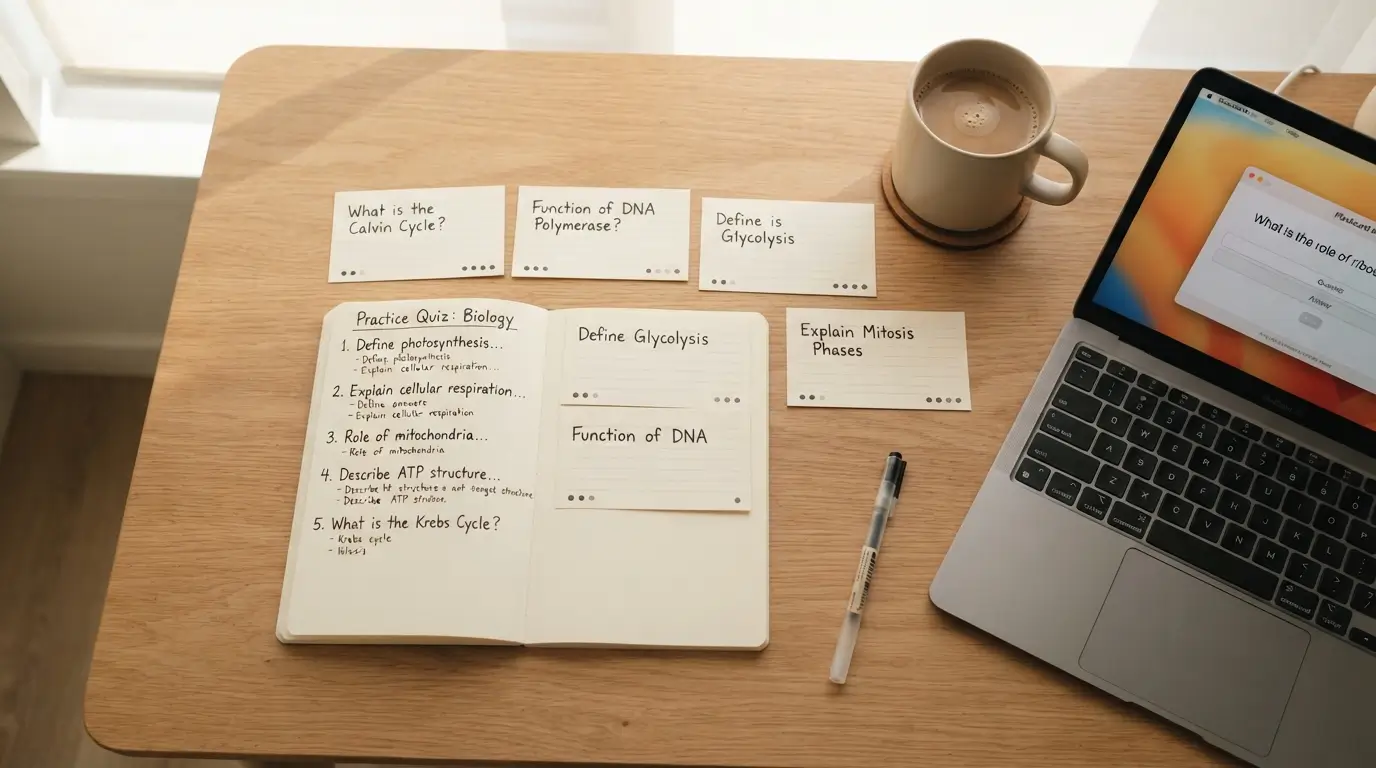
Switching to active recall forces your brain to retrieve answers from memory without looking. Instead of re-reading a textbook chapter, close the book and write down every single concept you remember on a blank sheet of paper. Create digital flashcard decks in Anki or write prompt questions in your notebook margins. When you force your brain to struggle for an answer, you build durable neural pathways that hold up under exam pressure.
Build a Spaced Repetition Schedule That Prevents Cramming
Cramming the night before an exam might get you a passing grade on Friday, but by Monday morning, that knowledge evaporates completely. In the late nineteenth century, Hermann Ebbinghaus mapped out the forgetting curve, showing that humans lose up to seventy percent of newly acquired information within twenty-four hours if they make no effort to review it.
Beating the forgetting curve requires spaced repetition, which means reviewing concepts at systematically expanding intervals. Review your lecture notes twenty-four hours after class, then again three days later, one week later, and two weeks later. Spreading your study sessions into small, twenty-minute review blocks across multiple days cements concepts into long-term memory far better than an eight-hour marathon session ever could.
How to Study Smarter Instead of Spending More Hours Studying with the Feynman Technique
You do not truly understand a topic until you can explain it in plain, simple words to a middle school student. Named after Nobel Prize-winning physicist Richard Feynman, this strategy exposes every hidden gap in your comprehension within minutes.
Grab a blank notebook page, write the topic name at the top, and teach the concept out loud as if you were speaking to a beginner. The moment you catch yourself using complex textbook jargon or stalling on an explanation, stop. That exact hesitation points directly to the gap in your foundation. Open your source material, re-learn that specific missing piece, and simplify your explanation until it sounds conversational. Master the Feynman technique and you will spend far less time guessing what you actually know.
Eliminate Low-Yield Study Traps and Pseudo-Work
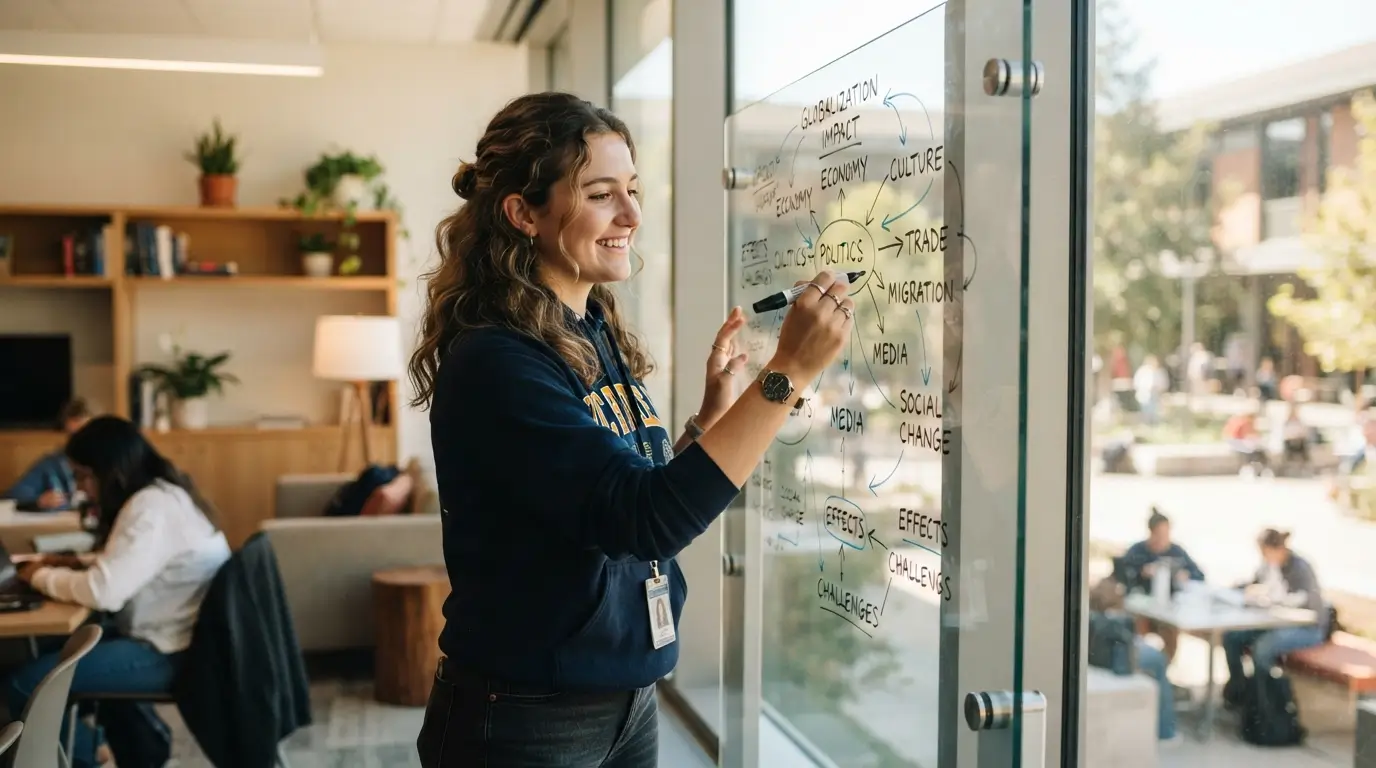
Spending three hours building aesthetic, pastel-colored dashboards inside Notion feels productive, but it teaches your brain absolutely nothing. Many students confuse the physical act of organizing with the mental act of learning. Rewriting lecture slides word for word, color-coding binders, and formatting digital summary sheets are classic examples of low-yield study traps.
Realizing how to study smarter instead of spending more hours studying begins when you replace busywork with genuine mental effort. Cut out the decorative setup routines and focus entirely on high-yield tasks like solving problem sets, explaining mechanisms out loud, or drafting practice essays. If a study activity feels easy and relaxing, it is probably pseudo-work that delivers zero return on your time investment.
Master Interleaving to Sharpen Problem-Solving Speed
Most students practice math or science problems in predictable, uniform blocks. They solve twenty factoring problems in a row, followed by twenty quadratic equations, followed by twenty word problems. While blocked practice feels smooth, it fails to prepare you for actual exam conditions where questions appear in random order without obvious category labels.
Using interleaving solves this problem by mixing different problem types, subjects, and formulas within a single study session. When you switch between related topics, your brain must constantly evaluate which strategy to apply before executing the solution. This deliberate switching feels harder in the moment, but it dramatically sharpens your analytical reflexes and prevents you from freezing up during tests.
Run Focused Sprint Sessions Using Timed Intervals
Sitting in a library chair for six continuous hours usually yields about ninety minutes of actual deep thinking, with the rest lost to daydreaming, snack breaks, and phone checks. Parkinson’s Law states that work expands to fill the time available for its completion. When you give yourself an open-ended afternoon, your brain automatically works at a sluggish, low-intensity pace.
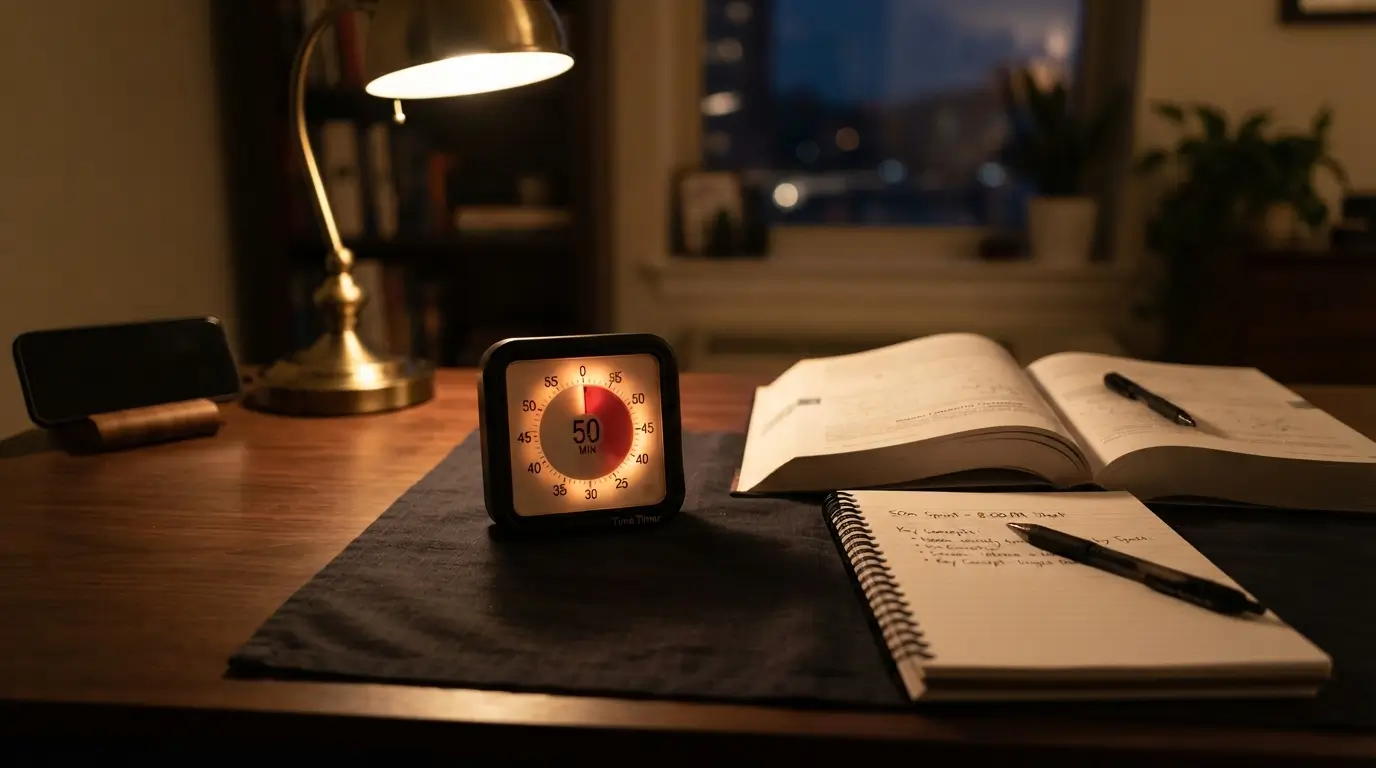
Mastering how to study smarter instead of spending more hours studying relies on intense concentration rather than long, sluggish shifts. Structure your day using structured time blocking with fifty-minute focus sprints followed by ten-minute breaks. Put your phone in another room, turn on the Forest app to block distracting websites, and work with undivided intensity. Two focused sprint sessions will easily accomplish more than an entire unfocused evening.
Turn Practice Exams into Diagnostic Feedback Loops
Taking a practice exam at the end of your study week is standard advice, but throwing away the results after grading them is a massive waste of insight. A practice exam is not just an assessment tool. It is a precise diagnostic roadmap showing you exactly where your preparation is falling short.
Whenever you finish a practice test, build a simple diagnostic error log to categorize every single mistake you made. Group your wrong answers into three specific buckets:
- Conceptual misunderstandings where you did not know the underlying theory
- Procedural errors where you picked the wrong formula or step
- Careless execution slips caused by rushing or misreading the question
Spend your remaining study time targeting the conceptual and procedural buckets rather than re-reading material you already answered correctly.
Protect Sleep to Consolidate Long-Term Memory
Sacrificing sleep to squeeze in an extra chapter creates an immediate cognitive tax on your brain. During deep, slow-wave sleep and rapid eye movement stages, your brain replays the day’s learning experiences, transferring temporary data from the hippocampus into the neocortex for permanent storage.
Depriving yourself of rest disrupts this vital memory consolidation process, meaning a large portion of what you studied simply fails to stick. Pulling an all-nighter also cuts your working memory capacity and executive function by up to thirty percent the next morning. Aim for seven to eight hours of quality sleep every night, especially during heavy exam weeks, so your brain can properly file away your hard work.

Use Blurting for Fast Knowledge Audits
Blank paper is the most honest study partner you will ever find. The blurting method is one of the fastest ways to test your retention on complex subjects like biology, history, or psychology without wasting hours writing full summaries.
Pick a specific subtopic, spend ten minutes reading your core notes, and then slide them completely out of view. Set a timer for five minutes and blurt out every single fact, date, diagram, and keyword you can remember onto a blank page. Once the timer rings, grab a red pen, open your notes, and mark down everything you missed or wrote down incorrectly. This immediate visual comparison shows you exactly what needs another review pass.
Frequently Asked Questions
How many hours a day should I spend studying?
Most productive college students cap intense, high-focus study at three to four hours daily. Quality always beats raw quantity. After four hours of deep cognitive retrieval, mental fatigue causes severe diminishing returns. Splitting your daily workload into two separate ninety-minute blocks preserves energy and keeps your recall sharp.
Does listening to music help when studying smarter?
Ambient noise, video game soundtracks, or low-fi beats without lyrics work best for deep concentration. Lyric-heavy songs hijack the phonological processing loop in your brain, making reading comprehension worse. If you notice background tracks pulling your attention away from complex problem sets, switch to brown noise or total silence.
Can you learn how to study smarter instead of spending more hours studying with ADHD?
Yes, breaking study sessions into short ten-minute sprints with tactile tools like whiteboards or verbal self-quizzing works exceptionally well. High stimulation keeps your focus engaged. Pairing body-doubling platforms like Focusmate with immediate micro-rewards also cuts procrastination dramatically, IMO, without forcing long, agonizing hours at a desk.
What is the best app for active recall and spaced repetition?
Anki remains the gold standard because its open-source algorithm automates review intervals for long-term memory. RemNote and Quizlet are also solid alternatives if you prefer modern interfaces. Pick one dedicated tool, use it consistently every day, and avoid spending excessive hours customizing card themes or decorative layouts.
Why do I keep forgetting what I read five minutes later?
Reading text is a passive task that tricks your brain into feeling false familiarity without building solid recall pathways. When you finish a paragraph, immediately look away and explain the core idea in your own words. That brief retrieval pause creates durable memory traces and stops reading amnesia.
Conclusion
Switching from marathon cramming sessions to high-intensity retrieval completely changed how I approach learning. Give these evidence-based strategies a run on your next exam prep and watch how much free time opens up in your schedule. Which of these study techniques are you going to test out first?
Also Read; How to Create a Productive Learning Environment at Home 2026