

Finding the best study techniques for students preparing for important exams usually happens when panic sets in at two in the morning. You stare at three hundred slides, your coffee tastes like battery acid, and nothing sticks. I spent years failing my midterm reviews before I scrapped passive reading entirely. Testing yourself under realistic conditions changes everything, turning overwhelming cram sessions into calm, repeatable mastery.
Auditing Your Material and Ditching the Highlighter Trap
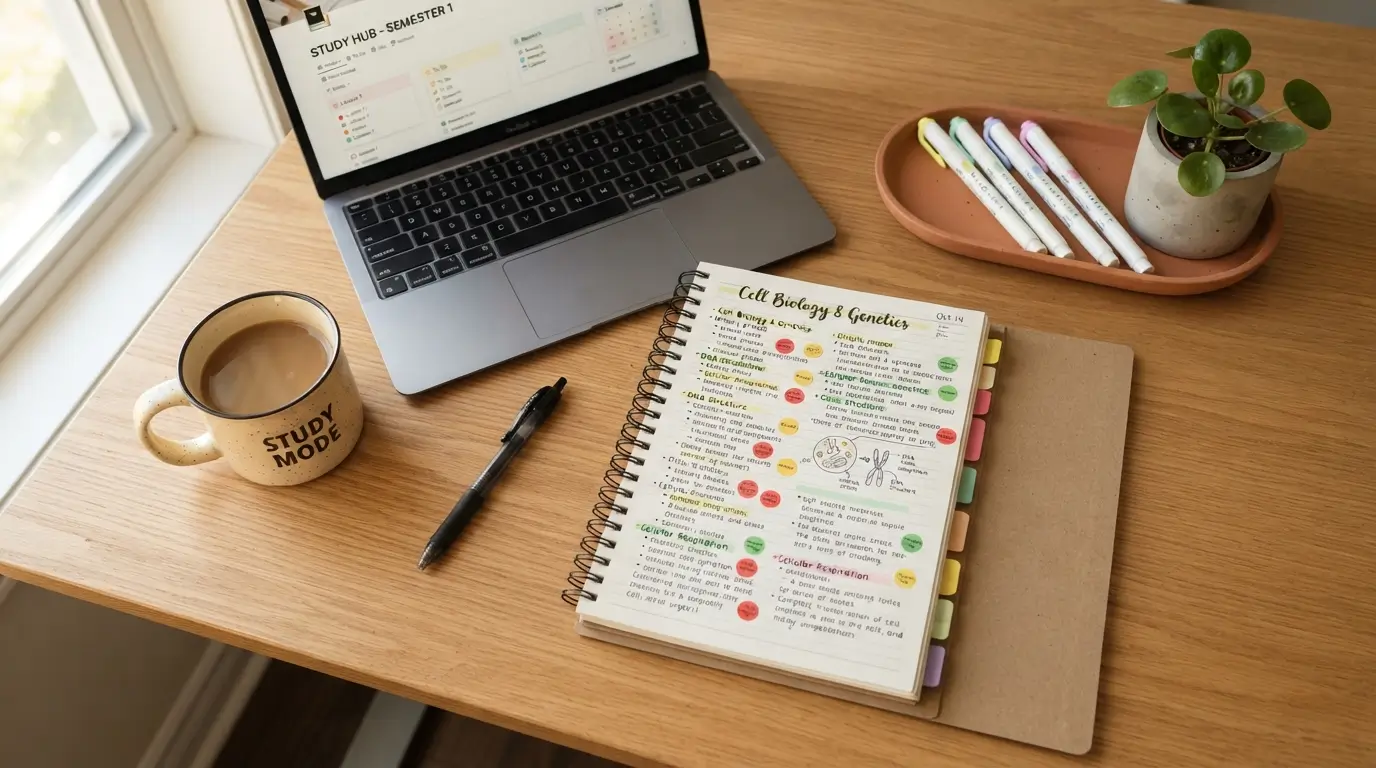
Highlighting feels productive, but it tricks your brain into confusing visual recognition with actual understanding. Start your preparation by gathering your syllabus, lecture slides, and past problem sets into a single workspace like Notion or a physical binder. Categorize every major concept using a simple red, yellow, and green traffic light system based on how well you can explain it right now without looking. Spend zero time turning your textbook into a neon rainbow.
Use your initial audit to identify the heavy, high-yield topics that make up sixty percent of the test score. I wasted entire semesters re-reading paragraphs four times, thinking the information sank in through osmosis. Real learning begins only when you put the marker down and force your mind to reconstruct difficult concepts from scratch.
Building a Spaced Retrieval Schedule Weeks in Advance
Cramming information twelve hours before an exam overloads your working memory and vanishes from your head the minute you walk out the door. You need spaced repetition to push complex theories into your long-term memory banks. Map out your study calendar at least three to four weeks before test day using Google Calendar or a basic spreadsheet.
Schedule short, focused sessions for each topic across expanding intervals, such as day one, day three, day seven, and day fourteen. This forced forgetting makes your brain work harder to retrieve the material every single time you revisit it. When you struggle slightly to recall a formula, you reinforce neural pathways that keep the data accessible during high-pressure testing situations.
Mastering Active Recall with Closed-Book Flashcards and Whiteboards
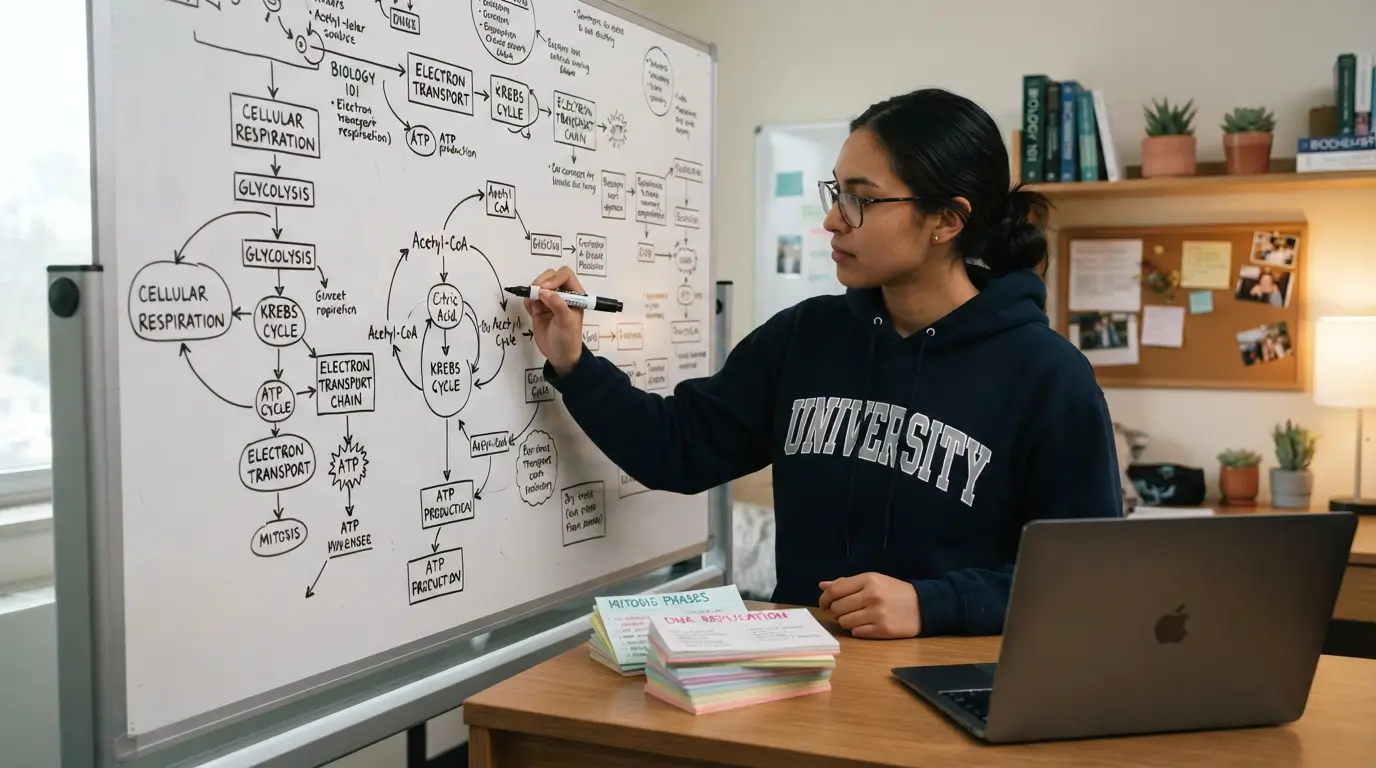
Passive note reading creates an illusion of competence that falls apart under real exam conditions. Replace passive review with active recall exercises using digital tools like Anki or physical dry-erase whiteboards. Write a broad question or core concept at the top of your board, close your laptop, and write down every related fact, formula, and connection you remember.
Compare your whiteboard map against your course materials to spot immediate errors and missing links. Digital flashcards with built-in algorithms work wonders for vocabulary-heavy subjects like biology or foreign languages. Testing yourself without safety nets exposes what you actually know versus what you merely recognize. This shift from input to output forms the foundation of the best study techniques for students preparing for important exams.
Why the Best Study Techniques for Students Preparing for Important Exams Focus on Recall
Most students fail their major exams not because they lacked effort, but because they practiced the wrong cognitive skill. Staring at summary sheets only trains your eyes to recognize familiar patterns on a printed page. High-stakes testing demands rapid memory retrieval under stressful time constraints without any hints nearby.
When you build your routine around constant retrieval, you condition your brain to perform under that exact pressure. You stop second-guessing multiple-choice distractors because the correct concept surfaces immediately. Prioritizing recall over passive absorption separates top performers from students who spend dozens of hours studying without seeing their grades improve.
Using the Feynman Technique to Expose Hidden Knowledge Gaps
Complexity often masks poor comprehension. Named after the physicist Richard Feynman, the Feynman Technique requires you to explain complicated ideas in simple, plain language as if teaching a twelve-year-old child. Pick a difficult topic from your syllabus, grab a blank piece of paper, and write out an explanation without relying on textbook jargon or buzzwords.
Whenever you stumble, stall, or resort to convoluted terminology, stop immediately and return to your source notes. That exact sticking point represents a gap in your fundamental grasp of the material. Teaching a study partner or even talking aloud to an empty room forces you to simplify core principles until they become second nature.
Simulating Full-Length Practice Exams Under Real Test Constraints
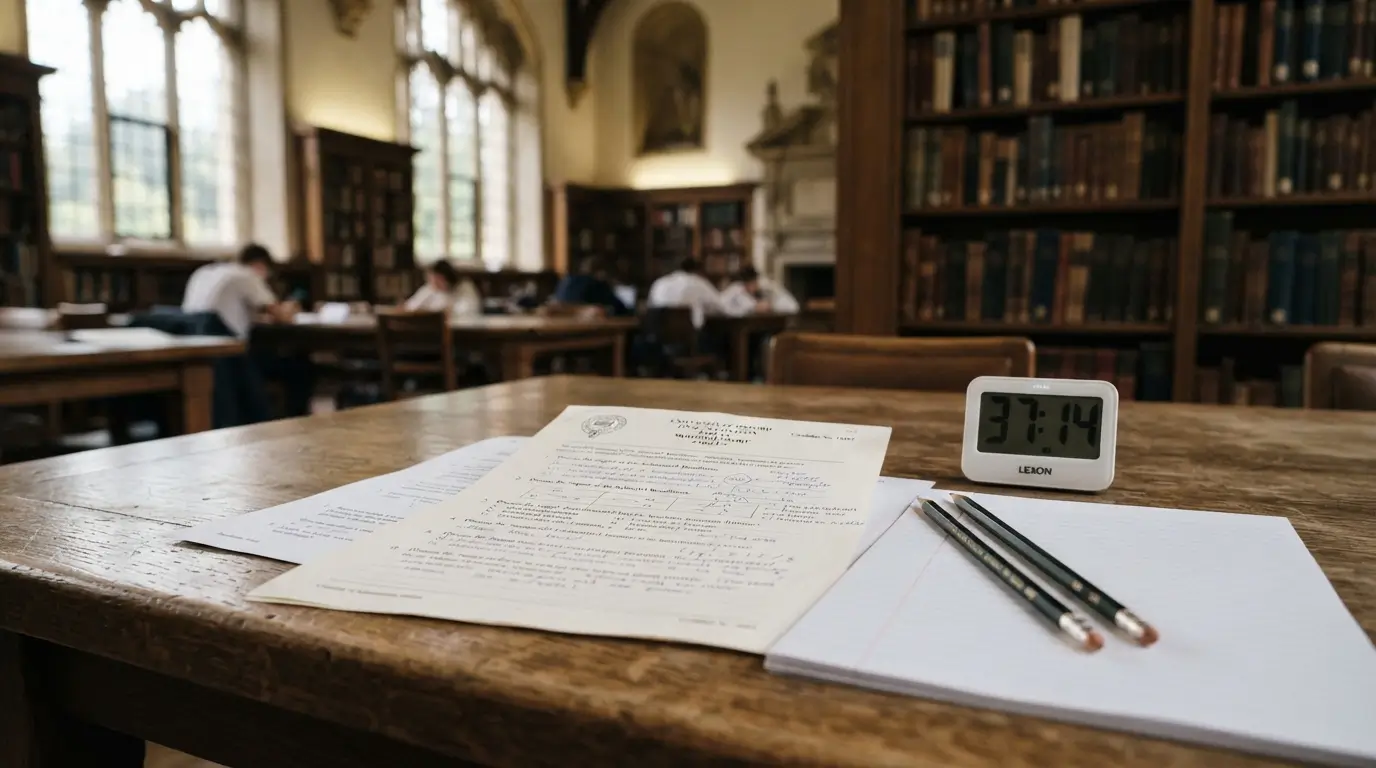
Practicing questions with music playing and answer keys sitting open on your desk gives you false confidence. Pull two or three official past papers, silence your phone, set a strict countdown timer, and sit in a quiet library room. Mimic the exact rules of test day, including scratch paper limits and calculator restrictions.
Taking unassisted mock tests reveals how fatigue impacts your decision-making during the final thirty minutes of a long test. Reviewing your test requires just as much effort as taking it. Create an error log where you analyze why you missed each question, whether from a conceptual flaw, misreading the prompt, or rushing through arithmetic. Implementing the best study techniques for students preparing for important exams means treating your mock sessions as serious dress rehearsals.
Interleaving Different Problem Types to Sharpen Pattern Recognition
Block practice feels comfortable because you solve twenty calculus problems using the exact same integration formula in a row. Unfortunately, actual exams never present questions in neat, predictable clusters. Switch to interleaved practice by mixing distinct topics, question styles, and problem sets within a single study block.
Combine chemistry stoichiometry with thermodynamic calculations, or mix historical essay prompts across different eras. Interleaving forces your brain to categorize the problem first before selecting the appropriate solution strategy. You might feel slower and make more mistakes during initial practice, but your ability to discriminate between problem types on test day increases dramatically.
Structuring Daily Work with Timed Pomodoro Intervals
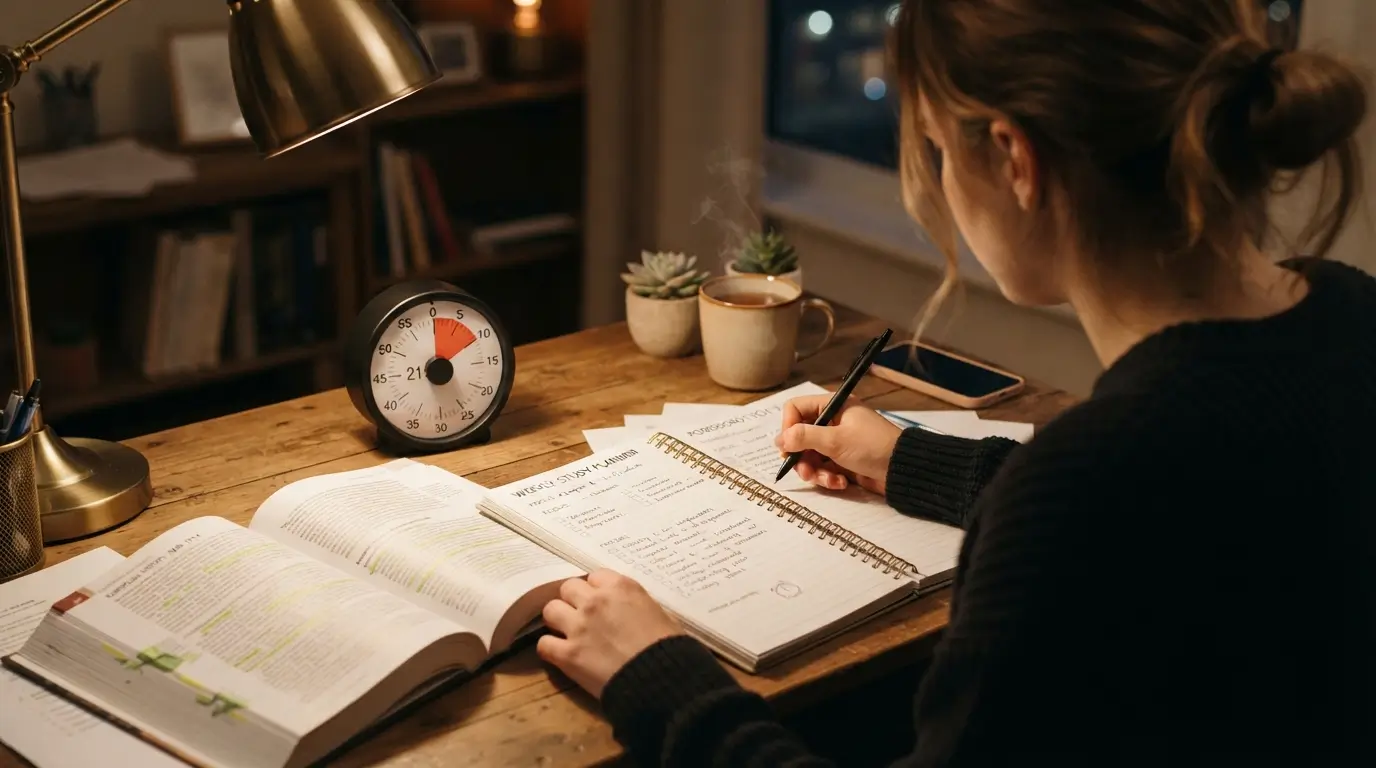
Endless, open-ended study blocks invite mindless social media scrolling and rapid mental exhaustion. Structure your day using the classic Pomodoro technique by dedicating twenty-five minutes to deep, undistracted work followed by a five-minute physical break. Apps like Forest or simple kitchen timers keep you honest about your actual working minutes.
During those twenty-five minutes, your phone stays in another room, browser tabs remain closed, and you focus on a single challenging task. After four consecutive intervals, take a longer twenty-minute break to walk, stretch, or grab a drink. This rhythmic pacing protects your focus across six-hour study marathons without burning out your willpower.
Optimizing Sleep and Nutrition for Peak Cognitive Stamina
Pulling all-nighters right before major exams destroys your brain’s capacity for memory consolidation and sharp logical reasoning. During deep sleep, your hippocampus replays the day’s learning, transferring critical facts into permanent cortical storage. Aim for seven to eight hours of quality rest every night, especially during the final week leading up to your test.
Fuel your body with steady meals containing complex carbohydrates, lean protein, and healthy fats while keeping excess caffeine under control. Chugging energy drinks late in the afternoon raises your heart rate, ruins your sleep architecture, and spikes pre-test anxiety. Physical preparation supports your cognitive endurance just as much as your academic review.
Frequently Asked Questions
How many hours a day should I study for major exams?
Quality matters far more than raw hours. Aim for three to five hours of deep, distraction-free study broken into structured intervals. Studying past five hours of intense cognitive effort usually produces diminishing returns, leading to fatigue and poor retention. Focus on what you accomplish during each block instead.
Which study methods work best for students preparing for high-stakes tests?
Active recall combined with spaced repetition consistently outperforms passive re-reading. Using digital flashcards, teaching concepts out loud, and solving timed past papers force your brain to retrieve information. These active methods build strong memory pathways, ensuring you perform reliably when facing challenging, high-pressure questions on test day.
How far in advance should I begin studying?
Start your preparation at least four to six weeks before your exam date. This runway gives you enough time to space out difficult topics, complete multiple full-length practice tests, and address conceptual weaknesses without resorting to stressful, last-minute cramming sessions that ruin your sleep and focus.
Should I study alone or join a study group?
A mix of both works best. Spend seventy percent of your time studying alone to master core facts, build flashcards, and solve problem sets. Use study groups specifically to quiz one another, debate complex topics, and explain difficult concepts using the Feynman method to verify your understanding.
How do I handle test anxiety during the exam?
Pause for sixty seconds and take four deep belly breaths to reset your nervous system. Skip questions that cause immediate panic, tackle the easiest problems first to build momentum, and return to difficult sections once your confidence settles. Grounding yourself early prevents temporary mental blocks from snowballing.
Conclusion
Building a reliable exam routine comes down to ditching passive habits and embracing the mild discomfort of active practice. Once you start testing yourself consistently and managing your daily energy, the panic fades away. What is the hardest subject on your schedule right now, and which technique will you test out first?
Also Read; Choose the Right Technology Tools for Your Daily Needs 2026