
I recently watched a doctor, a middle school teacher, and my own accountant use the same software model, showing me firsthand how ai technology is transforming education business and healthcare. The sudden shift feels dizzying, exciting, and occasionally unsettling all at once. Algorithms run quietly in the background of our classrooms, hospital wards, and client meetings, reshaping daily routines while most people still debate whether the hype is real.
Understanding How AI Technology Is Transforming Education Business and Healthcare
People often talk about modern algorithms as if they possess conscious thought, but the underlying reality comes down to massive mathematical pattern recognition. Machine learning models absorb billions of data points, isolate subtle trends across fragmented records, and generate clear outputs far faster than any human committee could manage. We spent years dealing with clunky predictive text and brittle rule-based software that crashed the moment someone entered a typo. Today, neural networks process complex human language, interpret messy medical records, and write functional computer code in mere seconds.
The real momentum behind how ai technology is transforming education business and healthcare lies in democratization. You no longer need an advanced engineering degree or an enterprise budget to deploy powerful automation tools. Off-the-shelf platforms like OpenAI’s GPT-4, Anthropic’s Claude, and specialized open-source packages allow solo practitioners to run custom digital assistants from a web browser. When an elementary reading tutor, an independent tax accountant, and an oncology researcher rely on the same fundamental software infrastructure, standard workflows across entire industries evolve overnight.
This transition is fundamentally changing how we value specific skills. Rote memorization, manual spreadsheet management, and standard clerical work no longer provide a competitive advantage. Value now flows toward clear communication, critical verification, and creative strategy. We are witnessing a monumental shift where software stops functioning as a static storage bin and starts operating as an active intellectual collaborator.
Classrooms Move Beyond One-Size-Fits-All Lessons
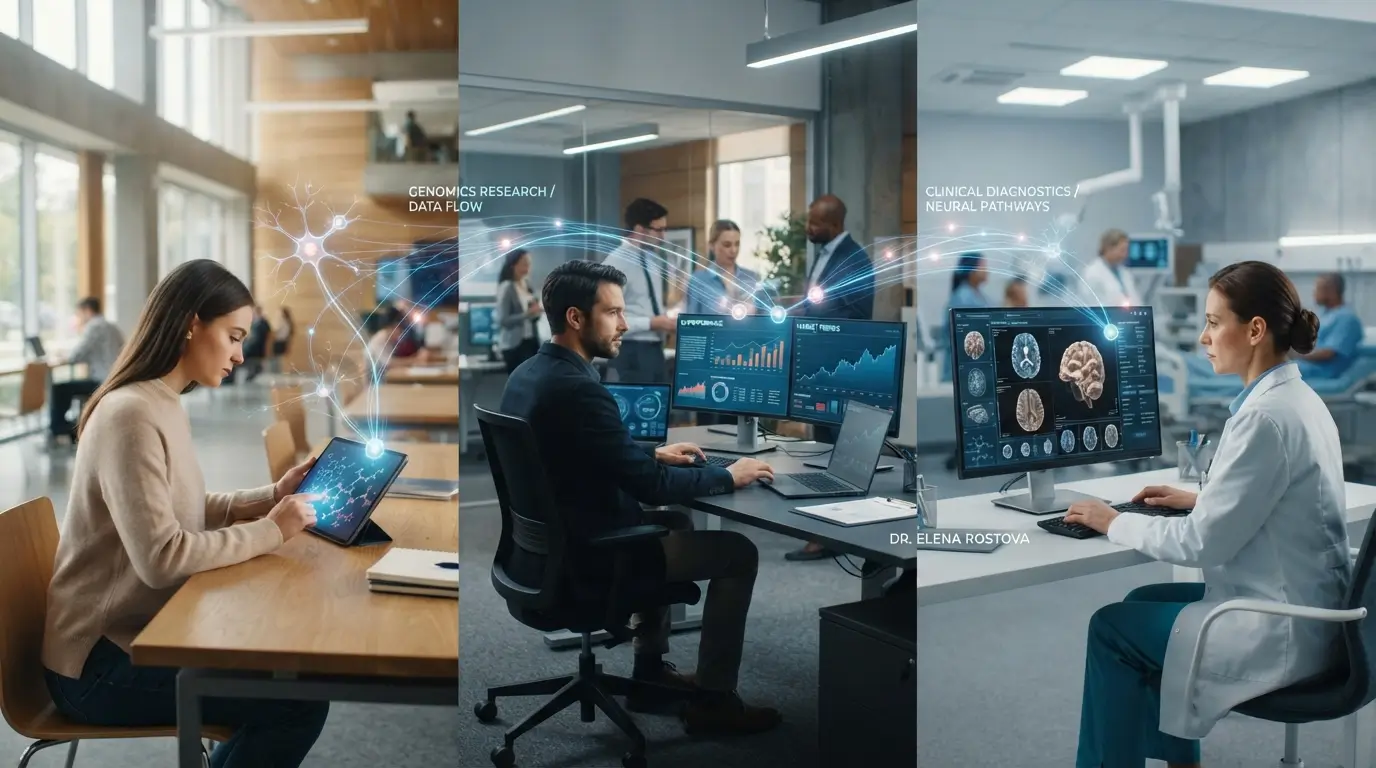
Standardized schooling has forced thirty children with radically different learning speeds into identical lectures for well over a century. That rigid structure inevitably leaves slower students stranded while faster learners grow completely disengaged. Platforms like Khan Academy with Khanmigo and Duolingo with Max provide responsive, round-the-clock guidance tailored to each student’s current mastery. These programs monitor exactly where a student hesitates during algebra equations, adjust the difficulty curve on the fly, and ask guiding questions instead of simply spitting out the answer.
Educators also gain back precious hours previously lost to clerical exhaustion. Drafting differentiated lesson plans, designing grading rubrics, and assembling individualized education programs consume entire weekends. Tools like MagicSchool and Diffit take a single historical document and rewrite it across multiple reading levels within seconds, allowing teachers to accommodate diverse classrooms without burning out. IMO, giving teachers their personal time back might be the single best outcome of this entire technological wave.
The glaring trade-off involves student over-reliance on automated text generators. When teenagers let software write their English essays and science summaries, true learning stops. Schools are adapting by changing assessment styles rather than engaging in a futile game of software detection. Forward-thinking teachers now emphasize oral defenses, collaborative whiteboard projects, and in-person discussions. This structural push establishes adaptive learning environments where students learn to think independently rather than outsource their cognitive effort.

Everyday Workplaces Cut Through Tedious Overhead
Corporate offices run on hundreds of repetitive administrative tasks that drain energy and stall momentum. Employees spend endless hours moving numbers between spreadsheets, tagging support tickets, and scheduling routine meetings. Modern business automation eliminates this busywork with minimal manual oversight. Customer support platforms like Intercom and Zendesk use natural language systems to resolve standard user inquiries immediately, preventing customers from waiting on hold or navigating frustrating phone menus.
My own daily operations shifted significantly after integrating lightweight automation for routine analysis. Tasks that once required an entire Friday morning, such as reconciling mismatched inventory reports or drafting standard client agreements, now wrap up in five minutes. The software spots financial discrepancies, drafts personalized follow-up emails, and surfaces trends buried in raw sales exports. In marketing, platforms like Jasper and Midjourney generate visual concepts and campaign outlines in minutes, shortening creative review cycles from weeks to hours.
The central hazard in business adoption is blind delegation. When managers let autonomous tools publish materials, communicate with key clients, or make purchasing calls without human review, embarrassing errors happen. Competent leaders use these algorithms as drafting assistants, never as the ultimate decision-maker. Sustainable growth belongs to companies that deploy workflow automation to support talented teams rather than treating algorithms as an excuse to fire essential staff.
Diagnostics and Patient Care Reach New Precision
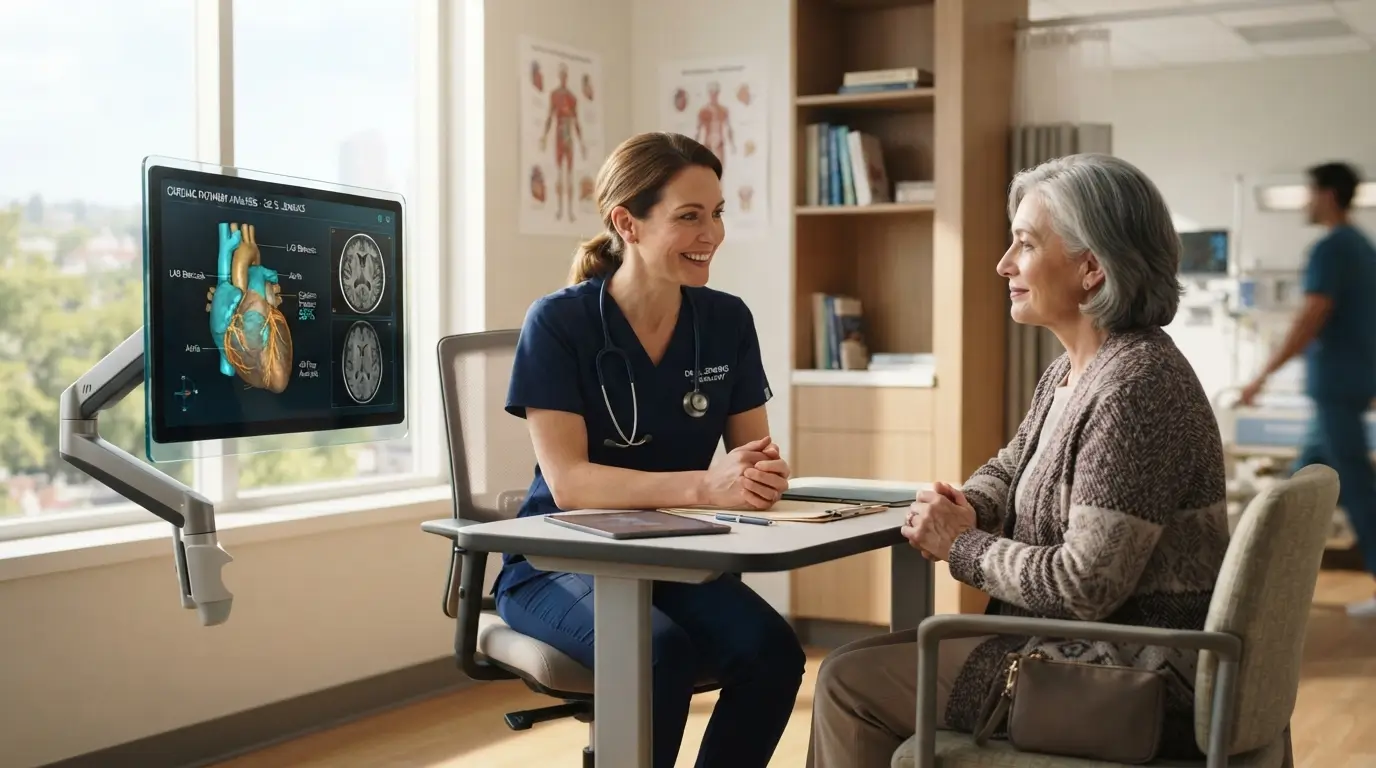
Clinicians face severe professional burnout while wrestling with heavy patient rosters and suffocating electronic health records. Ambient clinical documentation platforms like Nuance DAX and Nabla listen to doctor-patient conversations and automatically format clean, compliant medical notes in real time. Physicians can look directly at their patients, listen to their concerns, and conduct physical examinations without constantly turning around to peck away at a keyboard.
Diagnostic capabilities are expanding at a breathtaking pace. Computer vision models analyze radiology scans, mammograms, and retinal photographs with remarkable speed, catching microscopic abnormalities that human eyes might miss during a chaotic twelve-hour shift. In research laboratories, structural biology tools like DeepMind’s AlphaFold predict complex protein folding patterns instantly, compressing years of expensive wet-lab experiments into hours of digital simulation.
Medical adoption demands rigorous oversight. A hallucination in a marketing newsletter causes temporary embarrassment; an undetected hallucination in a chemotherapy protocol is fatal. Hospitals must enforce strict human verification protocols so that software never makes unmonitored treatment decisions. Relying on clinical decision support allows doctors to detect aggressive diseases much earlier while protecting the compassionate human relationship at the heart of healing.
The Practical Friction and Ethical Headaches We Cannot Ignore
Integrating automated software into society brings serious friction that enthusiasm cannot brush aside. Data security remains a massive vulnerability. When private medical histories, proprietary student records, or confidential business financials upload to external cloud servers, organizations risk catastrophic privacy violations. Regulators across the globe are stepping up scrutiny, demanding strict transparency about how companies store data and whether user inputs train public models.
Algorithmic bias presents another deep structural threat. If an automated hiring platform trains on historical corporate data reflecting past prejudices, it systematically filters out qualified applicants from underrepresented backgrounds. Similar risks exist in automated loan underwriting and insurance pricing. Furthermore, intellectual property rights remain in legal limbo as artists, authors, and software engineers challenge companies that harvested their creative output without consent.
Recognizing how ai technology is transforming education business and healthcare requires navigating these trade-offs with open eyes. Hasty bans fail because the technology is too widespread to block, but blind optimism invites regulatory fines and ethical disasters. Successful organizations will be the ones that mandate human verification, audit their algorithmic pipelines for bias, and maintain transparent standards that put human safety first.

Frequently Asked Questions
Which sector is adopting smart automation tools the fastest?
Business operations lead the pack because companies have clear financial incentives to cut administrative costs. Enterprise firms adopt customer service bots, predictive inventory software, and automated reporting systems rapidly to save payroll hours. Healthcare and education move at a more deliberate pace due to strict safety regulations and institutional inertia.
Will automated systems replace human teachers and medical doctors?
No, automated software acts as an assistant rather than a replacement. Algorithms excel at processing raw data and handling repetitive tasks, but they lack empathy, ethical judgment, and contextual awareness. A computer can suggest a diagnosis or generate a quiz, but humans must deliver care and provide mentorship.
What are the main risks in how AI technology is transforming education business and healthcare?
Data privacy, algorithmic bias, and hallucinations stand as the primary dangers. Educational institutions worry about academic honesty and critical thinking decay, corporate firms face trade secret leaks, and healthcare providers must avoid clinical errors caused by flawed training data. Regular human oversight remains essential across all three sectors.
Can small businesses benefit from machine intelligence without a large tech budget?
Yes, small businesses can adopt cost-effective cloud tools like Claude, ChatGPT Plus, or Zapier to automate scheduling, draft marketing copy, and clean messy financial spreadsheets. You do not need dedicated developers to build custom workflows when ready-made software handles everyday business chores for a modest monthly subscription.
How are schools handling student use of text generators for homework?
Schools are changing their assessment methods rather than relying on unreliable text detection software. Teachers assign more in-class writing, oral presentations, collaborative group projects, and hands-on laboratory work. Many instructors now teach students how to prompt software constructively for research and revision rather than banning the technology.
How does machine learning reduce physician burnout in hospitals?
Ambient medical scribes listen to patient appointments and transcribe clinical notes automatically into electronic health records. This reduces the hours doctors spend on computer data entry every evening, letting them focus on patient consultations and reducing the administrative fatigue that drives many clinicians out of medicine.
Conclusion
Automated systems are already woven into the fabric of our offices, schools, and medical facilities. Using these tools to handle tedious chores gives us more time to focus on creative work, genuine connection, and complex problem-solving. How has this technology changed your own workday recently?
Also Read; Best Technology Gadgets and Innovations Worth Knowing in 2026